

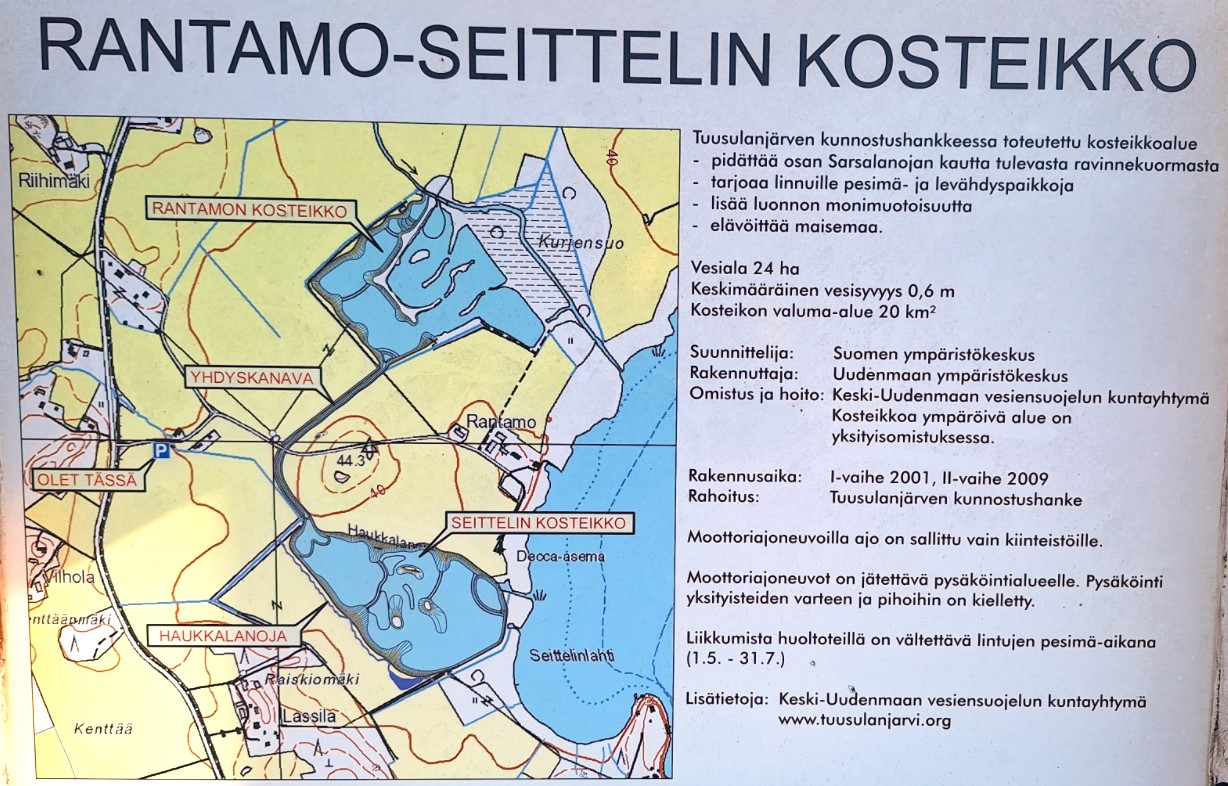
Kello oli 8 aamulla, kun käynnistin eBird-sovelluksen Tuusulan Rantamon parkkipaikalla ja valmistauduin parin tunnin kävelyyn Rantamolle ja vieressä olevalle Seittelin alueelle havainnoimaan lintuja.
It was 8 a.m. when I opened the eBird app in the Rantamo parking lot in Tuusula and got ready for a couple of hours of walking around Rantamo and neighboring Seitteli to observe birds.
Ensimmäinen lintu, jonka kuulin, oli käki, joka kukkui muutaman kerran jossain lähistön puussa.
The first bird I heard was a Cuckoo, which called a few times from a tree nearby.
Käveltyäni noin 100 metriä pääsin peltojen reunaan, jossa ensimmäinen näkemäni lintu oli töyhtöhyyppä. Kaikkiaan niitä oli 7 lintua lentelemässä pellon päällä.
When I walked 100 meters and reached the edge of the fields, the first bird I saw was a Northern lapwing. All in all, there were seven of them flying over the field.

Kohta kuulin hanhien ääntä taivaalta ja 20 tundrahanhea lensi ylitseni ja laskeutui läheiselle pellolle. Olivat todennäköisesti tulossa pitkältä muuttomatkalta ja pysähtyivät hetkeksi lepäämään ja ruokailemaan.
Then I heard the sound of geese in the sky, and 20 Greater white-fronted geese flew overhead and landed in a nearby field. They were probably returning from a long migration and had stopped for a moment to rest and feed.

Parin tunnin aikana näin peltojen päällä myös 10 iloisesti laulavaa kiurua, jotka kuuluttivat omia reviireitään todella voimakkaasti.
Over the fields during a couple of hours, I saw 10 Eurasian skylarks singing cheerfully, marking their territories very loudly.
Yksi varis lensi hieman kauempaa ohi ja västäräkki käveli tiellä edelläni.
A Carrion crow flew by a little ways off, and a White wagtail was walking on the road ahead of me.
Kun lähestyin sähkömuuntajaa niin, paikalle tyypillisesti, näin sen lähellä 3 pikkuvarpusta, ne jotenkin vain kuuluvat tämän rakennuksen ympäristöön.
As I approached the electrical transformer -building, I saw—as is typical for this spot—three Eurasian tree sparrows near it; they just seem to be a natural part of the surroundings of this building.

Saavuttuani lähelle Rantamon allasta pääsin jo näkemään mitä lintuja siellä uiskentelee. Vedessä oli laulujoutsen, nokikana sekä lautalla ja ilmassa 15 naurulokkia.
I walked close to the edge of the Rantamo pond, so I was already able to see what birds were swimming there. A Whooper swan and a Eurasian coot were swimming, and there were 15 Black-headed gulls on the raft and in the air.

Kaksi naurulokkia seisoskeli rauhallisen näköisenä pienen oksan päällä lammessa. Mutta sitten alkoi tapahtua. Koiras hyppäsi naaraan selkään ja parittelu alkoi.
Two Black-headed gulls stood calmly on a small branch in the pond. But then things started to happen. The male jumped onto the female’s back, and mating began.

Katso täältä kuvat (18) parittelun etenemisestä.
Click here to see photos (18) of the mating process.
Lopulta pariskunta rauhoittui ja lähti lentoon.
Finally, the couple calmed down and took off.
Mutta sitten alkoi taas kuulua hanhien ääntä taivaalta ja valtavia parvia valkoposkihanhia lensi ylitsemme. Parvet yksitellen laskeutuivat Rantamon lammen takana oleville pelloille. Arvioin, että näitä lintuja oli noin 1.700.
But then I began to hear the sound of geese in the sky again, and huge flocks of Barnacle geese flew overhead. One by one, the flocks landed in the fields behind Rantamo pond. I estimated that there were about 1,700 of these birds.

Lammen päällä lenteli koko ajan kalatiiroja kalastamassa ruokaa tai kisailemassa toistensa kanssa.
All the time, Common terns were flying over the pond, fishing for food or competing with one another.


Kalatiirat pesivät yhdyskuntina tai yksittäin merenrannoilla tai sisämaan vesistöissä, Suomessa ne viihtyvät toukokuusta syyskuuhun ja palaavat sitten talveksi Länsi- tai Etelä-Afrikkaan. Kalatiiran erottaa lapintiirasta yleensä mustasta alueesta oranssinpunaisen nokan kärjessä, kun taas lapintiiran nokka on verenpunaisempi ja ilman mustaa aluetta. Kalatiiralla on myös hieman pidemmät jalat. (Svensson, Mullarney, Zetterstöm: Lintuopas, Euroopan ja Välimeren alueen linnut)
Common terns nest in colonies or individually along seashores or on inland waterways; in Finland, they stay from May through September and then return to western or southern Africa for the winter. The common tern can usually be distinguished from the Arctic tern by the black patch at the tip of its orange-red bill, whereas the Arctic tern’s bill is a deeper red and lacks this black patch. The common tern also has slightly longer legs. (Svensson, Mullarney, Zetterstöm: Bird Guide, Birds of Europe and the Mediterranean)
Sitten oli aika siirtyä Seittelin lammen puolelle.
Then it was time to head over to Seitteli pond.
Rantamon ja Seittelin lampien välissä menee muutaman metrin levyinen oja ja hienosti sieltä nousi ojan reunalle sinisorsa koiras, joka alkoi huutelemaan – minulle ei selvinnyt kenelle se huusi tai oliko se kutsuhuuto vai varoitus.
Between the Rantamo and Seitteli ponds runs a ditch a couple of meters wide, and a male Mallard suddenly flew up from it and landed on the bank, where it began to call out. I couldn’t tell who it was calling to or whether it was a call of greeting or a warning.

Kun palasin Seitteliltä takaisin, niin sinisorsan tilanne selvisi, se ohjasi naarasta varmaankin pysymään tiellä eikä lähtemään pellolle seikkailemaan.
When I got back from Seitteli, the situation with the Mallard became clear; it had probably guided the female to stay on the road and not go off into the field on an adventure.

Jos Rantamon alue on pääosin avointa pelto- ja lampimaisemaa, niin Seittelille vievän tien vieressä olevan joen molemmin puolin on paljon pensaita ja lähestyttäessä itse lampea, alkavat reuna-alueet olla korsia ja ruovikkoa täynnä.
While the Rantamo area consists mainly of open fields and a pond, there are many bushes on both sides of the river running alongside the road leading to Seitteli, and as you approach the pond itself, the banks become overgrown with brush and reeds.
Keskellä Seittelin lampea on iso saari ja siellä asuu valtava naurulokkiyhdyskunta. Arvioin noin 200 lintua. Paikallinen lintuyhdistys (Keski- ja Pohjois-Uudenmaan Lintuharrastajat Apus ry) järjestää talvisin talkoita, joissa kyseessä olevaa saarta kunnostetaan.
In the middle of Seitteli pond there is a large island that is home to a huge colony of Black-headed gulls. I estimated about 200 birds. The local birdwatching association (Keski- ja Pohjois-Uudenmaan Lintuharrastajat Apus ry) organizes volunteer workdays in the winter to restore the island.

Matkalla Seittelin lammelle kuulin viereisissä pensaissa ja ruovikoissa mustarastaan, ruokokerttusen ja pensaskerttusen laulua.
On my way to Seitteli pond, I heard the songs of Common blackbird, Sedge warbler, and Common whitethroat in the nearby bushes and reeds.
Kävelin lammen oikeaa reunaa noin puoleen väliin ja pysähdyin rantapenkalle kahvitauolle.
I walked along the right side of the pond until I reached about halfway and stopped on the bank for a coffee break.
Kahvitauon aikana kuulin rastaskerttusen laulavan naurulokkisaaren reunalla, mutta yrityksistäni huolimatta en onnistunut sitä näkemään.
During my coffee break, I heard a Great reed warbler singing near the edge of the Black-headed gull island, but despite my best efforts, I couldn’t spot it.
Onneksi kuitenkin läheiseen pensaaseen lennähti ruokokerttunen kertomaan, että tämä on hänen reviiriään, jonne olin tullut istuskelemaan.
Fortunately, though, a Sedge warbler fluttered down to a nearby bush to let me know that this is its territory—the very spot where I’m now sitting and drinking coffee.

Yksinäinen silkkiuikku ui lammen keskellä.
A lone Great crested grebe was swimming in the middle of the pond.
Kahvitauon jälkeen aloin palailla takaisin, kun ruovikon keskeltä lensi pieni lintu näkyville ruo’olle laulamaan, pajusirkku.
After a coffee break, I started heading back when a small bird flew out of the reeds and landed on a stalk of grass to sing – a Common reed bunting.

Lähestyessäni parkkipaikkaa vasemmalla puolella tietä on melko tiheä metsikkö ja sieltä kuulin vielä kuusitiaisen, kirjosiepon, punarinnan ja mustapääkertun laulua.
As I approached the parking lot, there is a fairly dense grove of trees on the left side of the road, and from there I could still hear the songs of the Coal tit, the European pied flycatcher, the Robin, and the Eurasian blackcap.
Retki oli taas erittäin onnistunut ja mielestäni tällä reissulla parasta oli rastaskerttusen äänen kuuleminen, se on melko harvinainen lintu.
The trip was another great success, and I think the best part of this trip was hearing the song of the Great reed warbler – it’s quite a rare bird.
Havaitut linnut (25 lajia): 1700 valkoposkihanhi, 220 naurulokki, 20 tundrahanhi, 10 kalalokki, 10 kalatiira, 10 kiuru, 7 töyhtöhyyppä, 6 ruokokerttunen, 4 sinisorsa, 3 naakka, 3 pikkuvarpunen, 2 käki, 2 laulujoutsen, 2 nokikana, 2 varis, kirjosieppo, mustarastas, pajusirkku, punarinta, rastaskerttunen, silkkiuikku ja västäräkki.
Birds observed (25 species): 1,700 Barnacle goose, 220 Black-headed gull, 20 Greater white-fronted goose, 10 Common gull, 10 Common tern, 10 Eurasian skylark, 7 Northern lapwing, 6 Sedge warbler, 4 Mallard, 3 Western jackdaw, 3 Eurasian tree sparrow, 2 Cuckoo, 2 Whooper swan, 2 Eurasian coot, 2 Carrion crow, European pied flycatcher, Common blackbird, Common reed bunting, European robin, Great reed warbler, Great crested grebe, and White wagtail.